

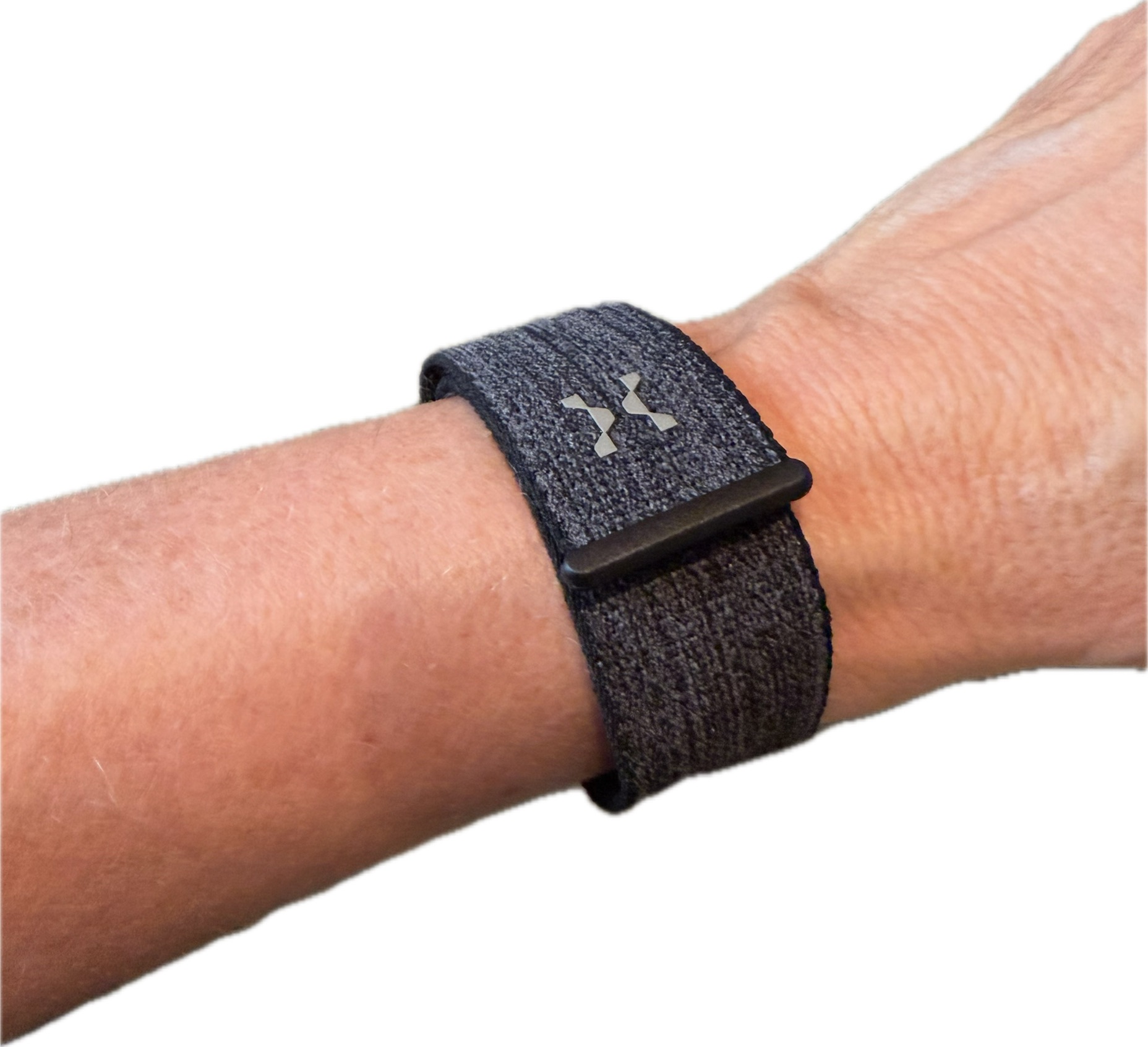
Weekly and often daily, I have a patient quoting me their stats from a wearable device like a fitness ring or health band. Often people focus on their sleep and sleep quality but a very interesting parameter often provided with these devices is heart rate variability or HRV. While you may get the general gist that lower is not good, do you really understand what it is telling you?
When you measure your heart rate you are measuring the number of beats per minute. When you look at HRV it is the interval between your heart beats. A metronome, used in music, clicks to the exact same beat each time. Our hearts have some variability depending on what is going on in the body and what the needs are. In your doctor’s office, an EKG (electrocardiogram) measures this variability or you may have been in a situation of wearing a holter monitor that monitors your variability on a continuous basis for several days. Now, with all the amazing technology we have available, you can get rough estimates of HRV with some wearable devices like chest straps, smartwatches or fitness rings.
READ ON to learn more about what this little number on your smart device is telling you and factors affecting it….
HRV measures your body’s ability to adapt. A higher HRV implies a healthier, more adaptable body while a lower HRV can indicate current or even future medical issues. This really is a measure of your autonomic nervous system and how it is working. You may not have heard about the autonomic nervous system but I bet you have heard of the sympathetic and parasympathetic nervous system. This system tells your heart when to speed up and work harder and when to relax. It not only reacts to changes in your physical bodies condition like with medical problems but with your life in general including your mental status! Let’s look at these two parts of the system a little closer:
Sympathetic: This creates your “fight-or-flight” response by increasing your heart rate and blood pressure. Ideally, this system is only activated in emergency situations but our “emergencies” are not being chased by a lion anymore but a deadline at work, traffic was bad, phones were on the blitz, your child is sick, and on and on. You can see how suddenly the sympathetic nervous system could easily get shifted into over-drive. Activation of the sympathetic system INCREASES your HRV.
Parasympathetic: This system helps control your relaxation response by slowing your heart rate and lowering your blood pressure. This is your “chill” mode. Activation of the parasympathetic system DECREASES your HRV (which is a good thing).
What is a good number?
In general:
High HRV: typically means your body is smoothly shifting between stress and relaxation. It is an indicator of resiliency and a well-recovered body.
Low HRV: often indicates your body is stuck in fight-of-flight response and can be related to fatigue, sleep issues, illness, chronic stress as well as mental and physical strain.
Each device will measure HRV with some variability so it is important that you stick with one device and compare your levels over a period of time to get your own baseline. HRV actually varies tremendously based on a person’s age, gender, fitness level and genetics. A healthy 60 year old HRV number may look very different than a healthy 20 year old. Drops in your personal average are a signal that you need more recovery and rest or something else medically is going on.
For general purposes, If your HRV is below 50 then this is considered unhealthy and a HRV above 100 is considered healthy. A number between 50-100 is considered compromised. Keep in mind you need to continually track yours to truly understand and apply what these numbers really mean for you.
Which device is best? Well, EKG and holter monitors are the best but let’s take those off the table. A chest strap is probably the most accurate for measuring HRV but the other wearables like smartwatches or fitness rings do a good enough job in following your own trends that I think it is worth paying attention to these numbers.
What can cause a low HRV?
- Diabetes
- High blood pressure
- Abnormal heart rhythms
- Asthma
- Anxiety
- Depression
- High BMI (overweight)
- Sleep issues
- Aging
You can improve your HRV by addressing all of the conditions above but these are key…
- Good quality sleep can be key and making sure to also take care of your mental status.
- Hydration
- Exercise
- Limit alcohol
- Manage stress
Techniques that have been shown to improve HRV include meditation, breathing exercises, tapping, EMDR, yoga, gentle exercise, vagal stimulators and so much more.
Taking care of your body and your mind are the key components to good HRV.
To your health,
Laura